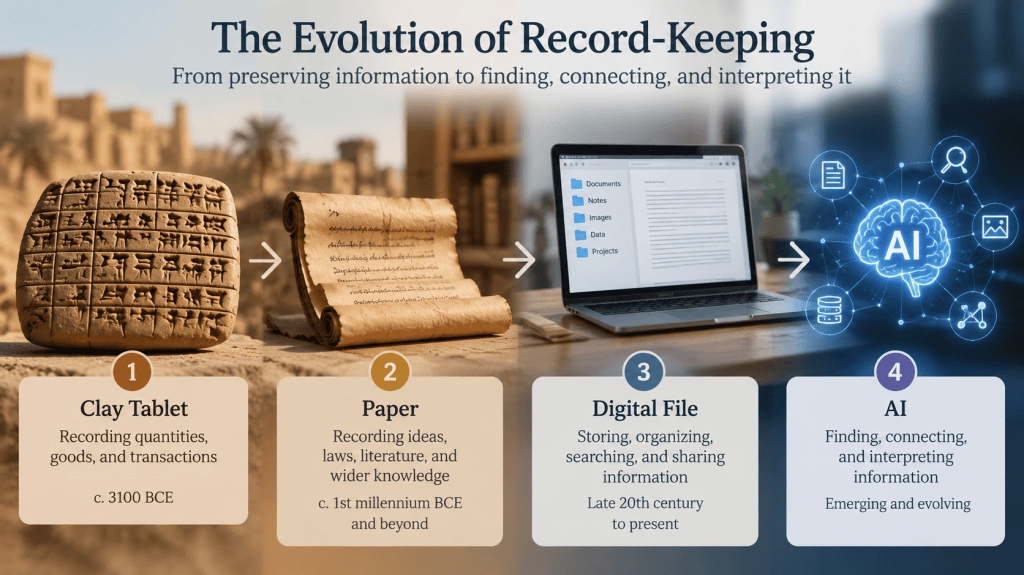
Category: Record-Keeping History

The history of how humans have recorded, preserved, organized, and retrieved information—from ancient writing systems to modern digital records.

  • How Did Ancient Mesopotamian Scribes Learn to Write?

    Writing in ancient Mesopotamia was not a skill that could be picked up casually.

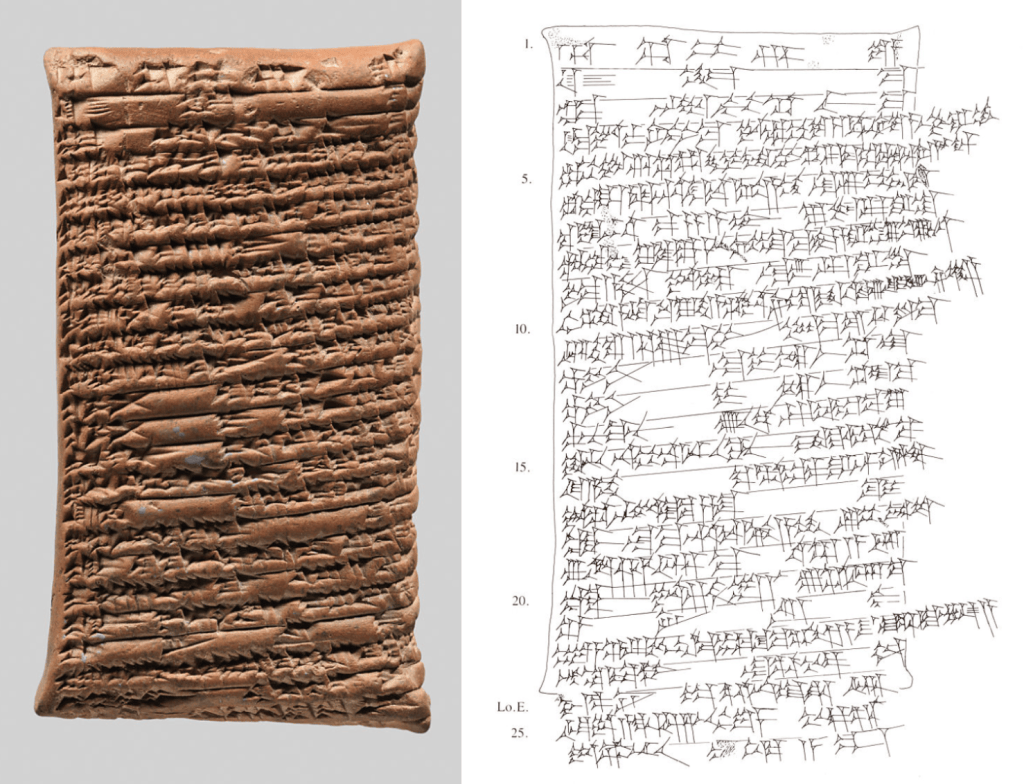
    Cuneiform required writers to press carefully shaped marks into clay with a stylus. Over its long history, the script was used to record several languages and could involve hundreds of signs rather than a small alphabet like the one used for English today. British Museum

    That complexity created a new problem. Once writing became important for administration, trade, literature, and other forms of record-keeping, societies needed people who could reliably read and produce those records.

    The result was more than a writing technique. It was a system for teaching people how to create, copy, organize, and preserve written knowledge.

    Learning to Write Meant Learning to Work with Clay

    Before students could become skilled scribes, they had to become familiar with the physical process of writing.

    A cuneiform tablet was not a blank sheet of manufactured paper. The writer worked with clay and impressed wedge-shaped signs into its surface with a stylus.

    This meant learning how to form recognizable signs was itself an important part of scribal training. Archaeological objects give us unusually direct evidence of this process.

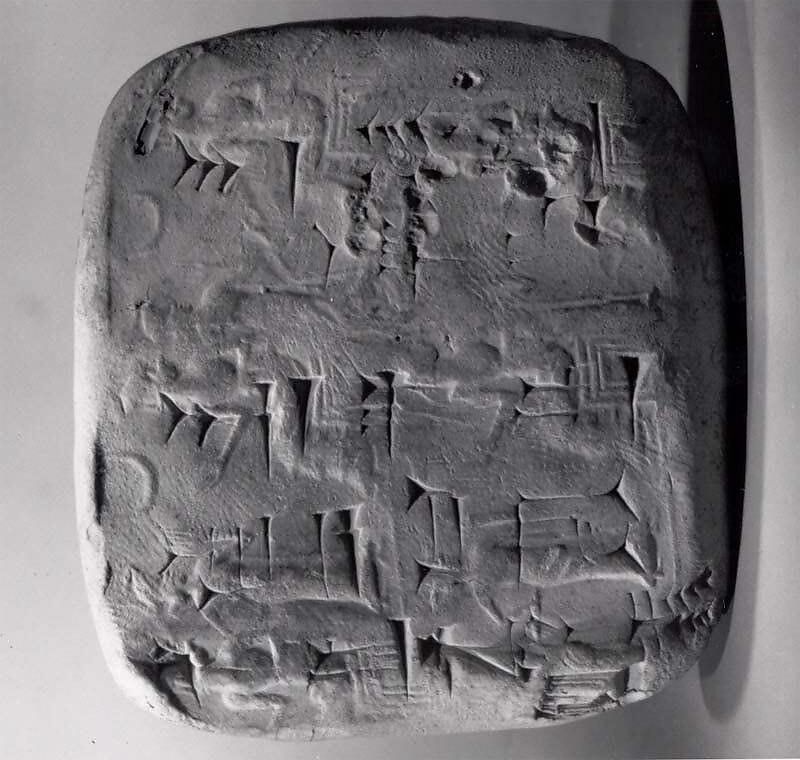
    The Metropolitan Museum of Art holds a small Babylonian student exercise tablet dating to roughly the second millennium BCE. According to the museum, a teacher wrote a word or sign on one side and the student repeated the exercise on the other. On this particular tablet, the name of the deity Urash was copied six times. The Metropolitan Museum of Art
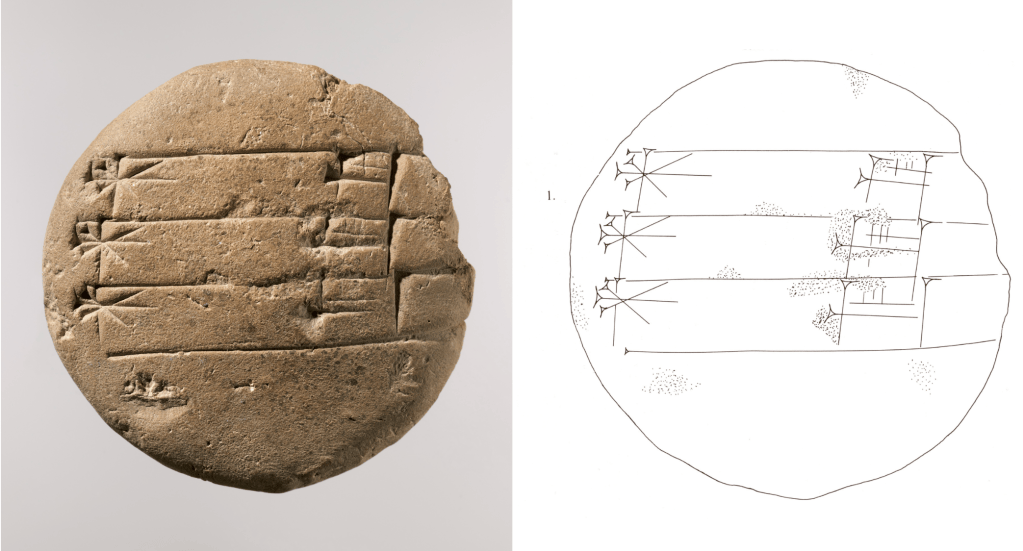
    Old Babylonian cuneiform student exercise tablet used for writing practice
    A Babylonian student exercise tablet, ca. 20th–16th century BCE. Students practiced cuneiform by copying signs and words into clay. The Metropolitan Museum of Art, Public Domain.

    It is easy to recognize the basic principle. A modern student might practice the same letter across a page. A Mesopotamian student could practice signs by repeatedly pressing them into clay.

    The technology was different, but repetition was already an important way of learning how to record information accurately.

    From Individual Signs to Lists and Texts

    Learning the shape of individual signs was only the beginning.

    As students progressed, scribal education involved copying and memorizing increasingly complicated material. Evidence from surviving school tablets shows exercises ranging from elementary sign practice to longer compositions. World History Encyclopedia
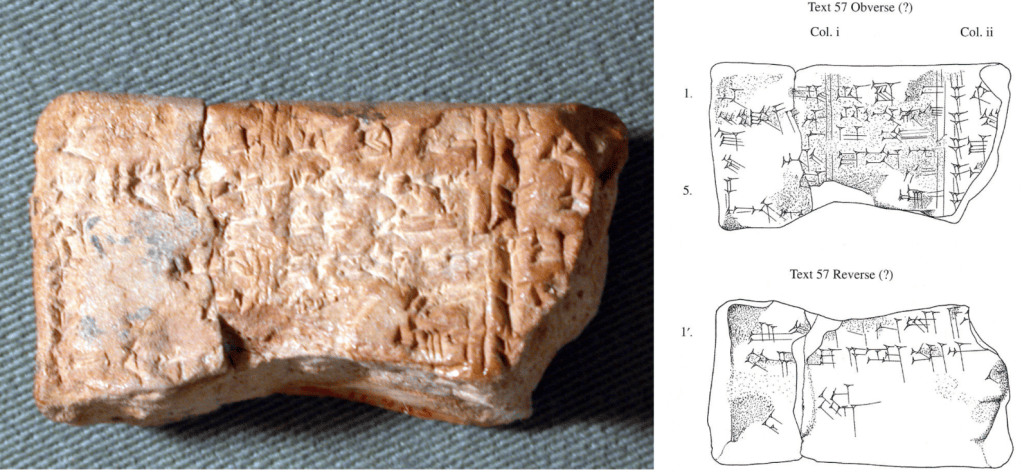
    Mesopotamian cuneiform school exercise tablet used for lexical study
    A Mesopotamian school exercise tablet from the Urra=hubullu lexical list, ca. late 1st millennium BCE. Such lists helped scribal students practice organized vocabulary rather than individual signs alone. The Metropolitan Museum of Art, Public Domain.

    Lists were especially useful. A list could organize words into a form that could be copied, compared, and memorized. Students encountered vocabulary connected with animals, plants, professions, places, objects, and other subjects.

    This is significant for the history of records.

    A written list does more than preserve individual words. It places information into an organized structure. The student therefore was not simply learning how to make marks in clay. Scribal training also transmitted established ways of arranging knowledge.

    More advanced students could move on to proverbs, literary compositions, and specialized material.

    In other words, learning to write gradually became inseparable from learning how earlier generations had recorded information.

    Who Became a Scribe?

    Literacy in ancient Mesopotamia should not be imagined as something distributed across society in the same way that basic literacy is expected in many societies today.

    Scribal literacy required specialized training and should not be imagined as something distributed across Mesopotamian society in the same way that basic literacy is expected in many societies today. Learning cuneiform involved sustained practice with signs, words, lists, and increasingly specialized written material.

    The institutions and settings in which scribes were trained also changed across Mesopotamia’s long history. The Sumerian term edubba, often translated as “tablet house,” is associated with scribal education, but it would be misleading to imagine one standardized school system operating unchanged everywhere for thousands of years.

    What remained important was the specialized nature of scribal knowledge.

    Writing was useful because Mesopotamian societies increasingly depended on records.

    Administrative accounts could track goods and resources. Letters could carry information across distance. Legal and economic documents could preserve transactions and obligations. Religious, scholarly, and literary texts could transmit knowledge beyond a single conversation or lifetime.

    Someone had to produce and interpret those records. That made the scribe more than a person with good handwriting. Scribal skill connected the physical act of writing with the institutions that depended on written information.

    Scribal Training Helped Knowledge Survive

    There is another reason scribal education matters.

    A writing system survives only if people continue to learn it.

    Imagine that a community creates thousands of records but stops teaching the next generation how to read and reproduce the writing system. The tablets might physically survive, but their usefulness would decline as knowledge of the script disappeared.

    Training provided continuity.

    Students copied signs that earlier scribes had used. More advanced learners copied vocabulary, proverbs, and compositions. In doing so, they were not merely completing exercises. They were reproducing a body of recorded knowledge.

    Some of the school exercises that survive today are especially valuable because mistakes, repetitions, and copying patterns can reveal parts of that learning process.

    A small practice tablet may therefore tell us something surprisingly important: records depend not only on a medium for storing information, but also on people who know how to interpret and reproduce it.

    That principle extends far beyond ancient Mesopotamia.

    Libraries need systems that allow their collections to be understood. Archives need people who know how records are organized. Digital information depends on formats, software, conventions, and skills that allow later users to retrieve it.

    The tools have changed enormously, but preservation has never been only about keeping an object intact. It is also about preserving the knowledge required to use the information stored within it.

    FAQ

    What was a Mesopotamian scribal school called?

    The Sumerian term edubba is commonly translated as “tablet house” and is associated with scribal education. Evidence for scribal training comes from school exercises, literary texts about education, and archaeological discoveries from different periods and locations in Mesopotamia. World History Encyclopedia

    Did students really practice cuneiform on clay tablets?

    Yes. Surviving exercise tablets provide direct evidence of scribal practice. Some small tablets contain signs or words written as exercises, including examples in which a student copied a form provided by a teacher. The Metropolitan Museum of Art

    Why were scribes important to the history of record-keeping?

    Creating a writing system was only part of the development of written records. Societies also needed people capable of reading, copying, and producing those records. Scribal training helped transmit both writing skills and recorded knowledge from one generation to another, allowing written information to remain useful long after it was first created.

    Sources & Further Reading

    • The Metropolitan Museum of Art — “Cuneiform tablet: student exercise tablet.” An Old Babylonian student tablet showing how scribes practiced signs and words by copying a teacher’s example.
      The Met — Student Exercise Tablet
    • ORACC (Open Richly Annotated Cuneiform Corpus) — “The Old Babylonian School.” An academic resource on scribal education, the edubba, school texts, and the Old Babylonian scribal curriculum.
      ORACC — The Old Babylonian School
    • The Metropolitan Museum of Art — “Cuneiform tablet: school exercise tablet, Urra=hubullu, tablet 1.” A later Mesopotamian school exercise tablet connected with the lexical-list tradition discussed in this article.
      The Met — Urra=hubullu School Exercise Tablet
    • The British Museum — “How to write cuneiform.” An accessible introduction to how cuneiform signs were impressed into clay and how the writing system worked.
      British Museum — How to Write Cuneiform
  • How Did Cuneiform Become a Writing System?

    The earliest clay tablets from Mesopotamia were remarkably useful, but they had an important limitation.

    They could record quantities of grain, animals, and other goods. They could help administrators keep track of resources. But recording a transaction is not the same as recording everything people can say.

    A list of commodities and numbers does not easily preserve a conversation, a legal argument, a prayer, or a story.

    For writing to become capable of doing those things, signs had to do more than identify objects and quantities. They also had to represent language.

    That transformation did not happen at a single moment. Over centuries, the recording systems of ancient Mesopotamia developed into cuneiform—a writing tradition capable of preserving increasingly complex forms of human thought.

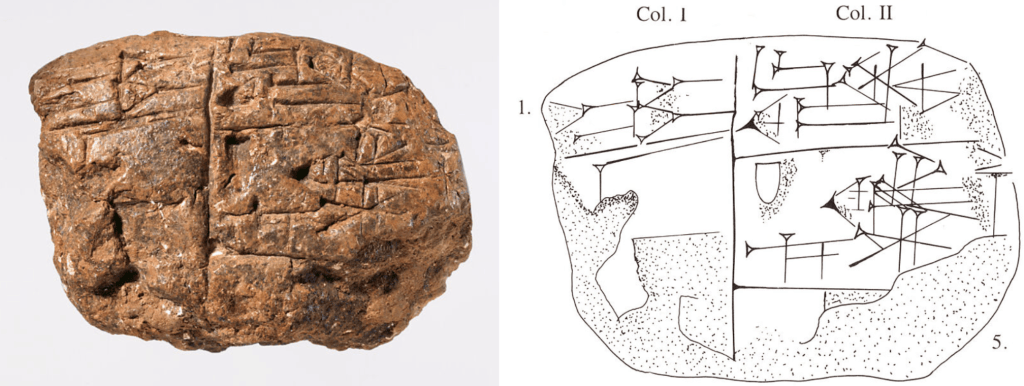
    Sumerian cuneiform tablet from Nippur dating to about 2600–2350 BCE
    Cuneiform tablet with a fragment of an account, ca. 2600–2350 BCE, Nippur, Mesopotamia. The Metropolitan Museum of Art. Public Domain.

    The Earliest Signs Were Designed for Practical Records

    Some of the earliest known writing from southern Mesopotamia appeared in the late fourth millennium BCE.

    Many surviving tablets from this period are administrative. They contain numerical systems and signs associated with commodities, labor, and institutional activities. This made them effective tools for accounting.

    A sign could help identify what was being counted, while numerical signs indicated quantities. In this context, a record did not necessarily need to reproduce a complete spoken sentence. It needed to preserve enough information for people working within the same administrative system to understand it.

    Modern scholars generally refer to this early stage as proto-cuneiform.

    Its importance lies not only in its age. Proto-cuneiform shows that writing emerged through a gradual process in which people experimented with ways of turning information into visible, durable signs.

    But as those signs were used for more purposes, the system began to change.

    When Signs Began to Represent Language

    One of the most important developments was the use of signs for their connection to spoken words and sounds.

    Imagine a sign that originally represents a particular object. If the spoken word for that object shares a sound with another word, the sign can potentially be used for its sound rather than only for the original object. This kind of change greatly expands what a writing system can express.

    Instead of requiring a completely different picture for every idea, writers can combine signs in ways that reflect elements of spoken language.

    Mesopotamian writing developed in this direction gradually. Signs could function in different ways: some represented words or ideas, while others could contribute phonetic information. Additional signs could also help readers identify the category or meaning of a word. This made the system much more flexible than a collection of pictures.

    Writing was becoming capable not merely of counting things, but of representing language.

    Why Did Cuneiform Become Wedge-Shaped?

    The appearance of the writing changed along with the system itself. Early signs could be drawn into soft clay, and some were more pictorial in appearance. Over time, scribes increasingly created signs by pressing a reed stylus into the clay. The tip and edges of the stylus produced characteristic impressions.

    These wedge-shaped marks are the reason modern scholars use the name cuneiform, from a Latin term associated with a wedge.

    The signs also became more abstract. Someone looking at a later cuneiform tablet cannot simply interpret the text by recognizing pictures of the objects being discussed. Learning to write therefore required knowledge of a complex system of signs and conventions.

    Cuneiform was not a language itself. It was a writing system, and over its long history it was adapted to write several languages, including Sumerian and Akkadian. That adaptability helped cuneiform remain in use for thousands of years across different parts of the ancient Near East.

    Writing Changed What a Record Could Preserve

    Once writing could represent language more extensively, the range of possible records expanded dramatically.

    Clay tablets continued to serve administrative purposes, but they could also preserve contracts, letters, legal texts, mathematical exercises, scholarly works, religious compositions, and literature.

    Old Babylonian cuneiform tablet containing a private letter from ancient Mesopotamia
    Old Babylonian cuneiform tablet containing a private letter, ca. 1632 BCE, Mesopotamia. The Metropolitan Museum of Art. Public Domain.

    This changed the role of the record.

    A record could now preserve not only how much grain had been delivered, but also agreements between people, messages sent across distances, calculations, instructions, and texts intended to be read again.

    The distinction matters even today.

    A spreadsheet can record quantities extremely well. A database can preserve structured information about thousands or millions of items. But neither format alone is designed to capture every kind of human expression.

    Different recording systems make different kinds of information possible—or easier—to preserve.

    The development of cuneiform demonstrates an early version of this principle.

    The history of writing was therefore not simply a progression from crude symbols to better-looking letters. It was a gradual expansion in what a record could represent.

    As records became capable of preserving more kinds of information, another problem inevitably followed.

    The more records a society accumulated, the more important it became to decide who would create them, how they would be organized, and how people could learn to read and write them.

    That would make the scribe one of the most important figures in the history of record-keeping.

    Sources & Further Reading

    The Metropolitan Museum of Art — Cuneiform tablet: Late Babylonian grammatical text

    The Metropolitan Museum of Art — Proto-cuneiform administrative tablet

    The British Museum — How to write cuneiform reed stylus

    FAQ

    Was cuneiform the first writing system?

    Cuneiform developed from some of the earliest known writing traditions in Mesopotamia, but describing any single system as simply “the first writing” can oversimplify the evidence. Early writing developed over time, and scholars continue to study how different early recording and writing systems emerged.

    Is cuneiform a language?

    No. Cuneiform is a writing system rather than a language. It was used to write multiple languages over its long history, including Sumerian and Akkadian.

    Why was the development of cuneiform important for record-keeping?

    It greatly expanded what written records could preserve. Systems that were initially especially useful for administration and accounting developed into forms of writing capable of recording language, allowing people to preserve letters, contracts, scholarship, literature, and many other kinds of information.

  • What Did Ancient Clay Tablets Record?

    When we imagine an ancient clay tablet, it is easy to picture a mysterious text filled with stories, laws, or religious ideas.

    But many of the earliest surviving tablets from Mesopotamia were concerned with something much more practical: keeping track of goods.

    Grain had to be counted. Supplies had to be distributed. Workers received rations. Institutions needed ways to remember what had come in, what had gone out, and how much remained.

    Clay tablets became part of a new solution to an old problem—how to preserve information when human memory was no longer enough.

    Cuneiform clay tablet recording a shipment of barley in ancient Mesopotamia
    Cuneiform clay tablet recording a shipment of barley, ca. 2029 BCE, Mesopotamia. The Metropolitan Museum of Art. Public Domain.

    Why Was Clay Used for Records?

    Southern Mesopotamia did not have the same natural resources as every other ancient region, but clay was readily available. That made it a practical material for recording information.

    While clay was still moist, marks could be drawn or pressed into its surface. Once the tablet dried, those marks could remain. Tablets could be relatively small, handled individually, and stored with other records.

    The material also shaped the way writing developed. Early signs were often drawn into clay. Over time, scribes increasingly used a reed stylus pressed into the surface. The resulting wedge-shaped impressions became characteristic of the writing system now known as cuneiform.

    The word cuneiform describes the wedge-shaped appearance of the script rather than a particular language. Cuneiform was eventually used to write several languages over its long history.

    But the earliest tablets belong to an earlier stage of that development. Scholars often call the signs on late fourth-millennium BCE tablets from southern Mesopotamia proto-cuneiform.

    What Did the Earliest Tablets Actually Record?

    Many early tablets were administrative records.

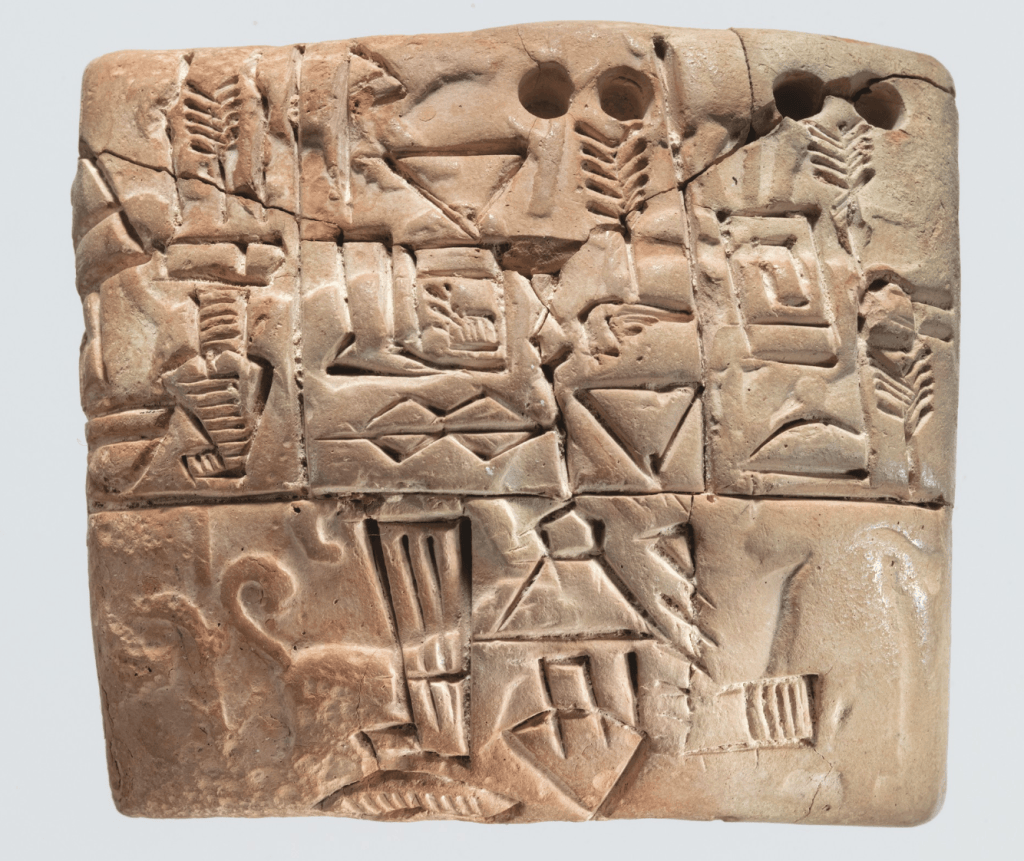
    One surviving tablet from Mesopotamia, probably from Uruk and dated to about 3100–2900 BCE, appears to document the delivery and distribution of grain, including barley and emmer wheat.

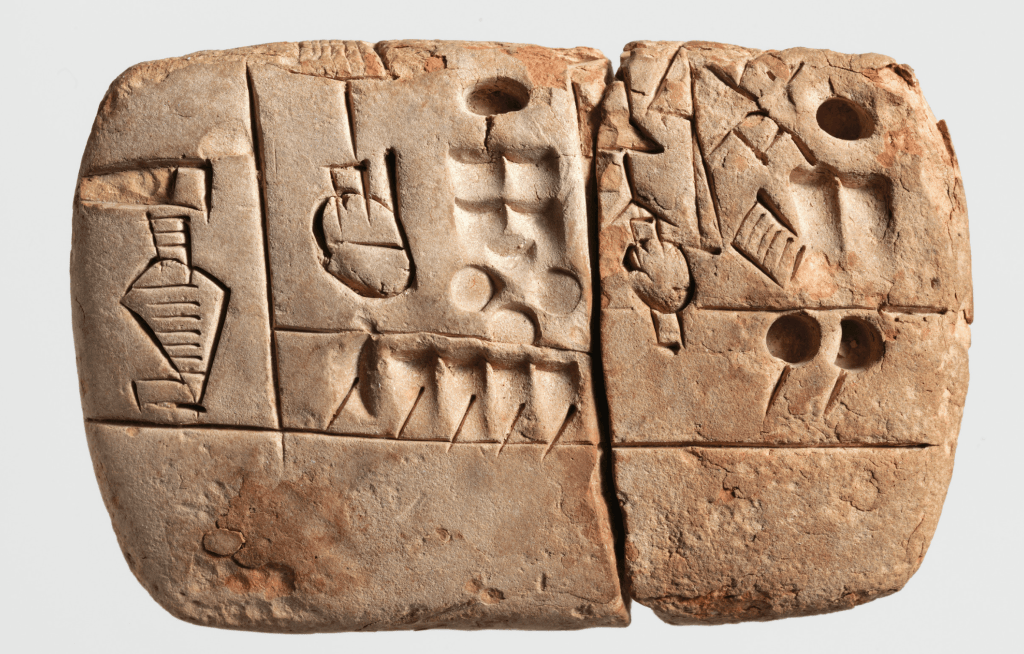
    Another tablet from the same general period records entries concerning malt and barley groats.

    These are not stories written for entertainment. They are records created to help manage resources. That distinction tells us something important about the development of recording systems.

    As settlements and institutions became larger, people needed to manage quantities of goods and labor that could be difficult to track through memory alone. A durable external record allowed information to remain available after the original transaction or distribution had taken place.

    A tablet could answer practical questions:

    How much grain was delivered? How much was distributed? What kind of commodity was involved? What quantity needed to be accounted for?

    The earliest texts are not always easy for modern scholars to interpret precisely. Proto-cuneiform lacked many of the grammatical features that later writing could represent, so researchers must often reconstruct meaning from signs, numbers, context, and comparisons with other tablets.

    That is why descriptions of individual early tablets frequently use cautious language such as “most likely” or “probably.”

    From Pictures and Numbers to Cuneiform

    Early Mesopotamian writing did not appear all at once in the familiar wedge-shaped form seen on later cuneiform tablets.

    The system changed over time.

    Some of the earliest tablets, dating to around 3300 BCE, used pictorial signs and numerical symbols to record economic information. By the following centuries, the forms and techniques of writing were changing.

    Proto-cuneiform clay tablet with seal impressions from ancient Mesopotamia
    Proto-cuneiform clay tablet with seal impressions, ca. 3100–2900 BCE, probably from Uruk, Mesopotamia. The Metropolitan Museum of Art. Public Domain.

    A sign could represent a commodity, while numerical signs represented quantities. This was extremely useful for accounting, but it was not yet the same as writing a complete spoken sentence.

    As the system developed, signs became increasingly abstract and writing became capable of representing language more extensively. That transformation dramatically expanded what could be recorded.

    Clay tablets eventually carried contracts, letters, legal documents, mathematical exercises, scholarly texts, religious works, and literature. Cuneiform was used for more than three thousand years and for several languages across the ancient Near East.

    The humble administrative tablet was therefore part of a much larger transformation: records were becoming a medium for preserving increasingly complex forms of human knowledge.

    What Clay Tablets Teach Us About Records Today

    A clay tablet and a digital spreadsheet seem to have almost nothing in common.

    One is made from earth and marked by hand. The other exists as digital data processed by computers.

    Yet their underlying purpose can be surprisingly similar.

    Imagine an ancient institution recording quantities of barley arriving and leaving a storehouse. Now imagine a modern organization tracking inventory in a database.

    The technologies are radically different, but both systems attempt to answer the same fundamental questions:

    What do we have? Where did it come from? Where did it go? How much remains?

    This is one of the most persistent themes in the history of record-keeping.

    New recording technologies do not eliminate the need to organize information. They create new ways to solve it.

    Clay tablets made information durable outside human memory. Later materials made records easier to transport, copy, collect, and read. Eventually, paper and printing allowed records to multiply on a scale that ancient scribes could never have managed.

    Digital technology would change the problem again.

    But before records could become portable, searchable, or connected, humans first had to learn how to preserve information in a stable form.

    In ancient Mesopotamia, clay provided one of the most important answers.

    Sources & Further Reading

    1. The Metropolitan Museum of Art — Proto-Cuneiform Tablet with Seal Impressions

    2. The Metropolitan Museum of Art — Cuneiform Tablet: Shipment of Barley

    3. The Metropolitan Museum of Art — Cuneiform Texts in The Metropolitan Museum of Art
    Metropolitan Museum of Art Resources-PDF

    4. The British Museum — How to Write Cuneiform, British Museum

    FAQ

    Were all Mesopotamian clay tablets accounting records?

    No. Administrative and economic records are especially important among the earliest surviving tablets, but clay tablets were later used for a much wider range of material, including letters, contracts, legal texts, mathematics, scholarship, religious works, and literature.

    Is proto-cuneiform the same as cuneiform?

    Not exactly. Proto-cuneiform is the term commonly used for an early stage of writing in southern Mesopotamia before the script developed into later cuneiform. The forms of the signs and the ways they represented information changed considerably over time.

    Why have so many clay tablets survived?

    Clay can become very durable once it dries, and firing can make it even more permanent. As a result, clay records can survive for extremely long periods under favorable conditions. Their survival gives modern researchers an unusually direct view of administrative practices, writing, and knowledge in ancient Mesopotamia.

  • Why Did Humans Start Keeping Records?

    Long before books, libraries, or digital files existed, people faced a basic problem: human memory was not always enough.

    A community could remember stories, customs, agreements, and obligations through speech. But as settlements grew and economic activity became more complicated, some information had to survive beyond a single conversation—or even beyond the lifetime of the person who remembered it.

    How much grain had been collected? Who had received a certain amount of goods? What had been exchanged, owed, or stored?

    Questions like these helped create a need for something more durable than memory.

    The earliest forms of record-keeping were not simply early versions of books. They emerged from practical attempts to preserve information outside the human mind. Understanding that transition helps explain not only the origins of writing, but also why people still create records today.

    Before Writing, People Still Had to Remember

    Writing is relatively recent compared with the long history of human communication.

    For most of human existence, knowledge was transmitted without written documents. Stories, traditions, skills, and social rules could be passed from one generation to another through speech, demonstration, ritual, and repeated practice.

    Oral transmission can preserve remarkably complex knowledge. But it has limits when information must be counted, compared, verified, or retrieved precisely.

    Imagine trying to manage a growing storehouse using memory alone. A person might need to remember how many containers of grain arrived, where they came from, how much had already been distributed, and what remained. As the number of people, goods, and transactions increased, keeping all of those details in memory became increasingly difficult.

    This is one reason the history of records is closely connected with counting and administration.

    Long before fully developed writing systems appeared, people used physical objects and marks to represent information. In the ancient Near East, for example, clay tokens have been studied as part of the development of systems for counting and accounting.

    Scholars continue to debate the exact relationship between these objects and the later emergence of writing, so it is safer to see them as part of a broader evolution of information practices rather than as a single direct invention of writing.

    The important change was conceptual: information could be represented outside the mind.

    Once that happened, remembering no longer depended entirely on a person.

    The First Records Were Often Practical

    When early writing developed in Mesopotamia during the late fourth millennium BCE, many surviving early texts were administrative in nature.

    They dealt with things such as commodities, labor, livestock, and distributions of goods.

    That may seem surprisingly ordinary. We often associate writing with literature, philosophy, religion, or history. Yet some of the earliest written evidence reflects a much more immediate problem: keeping track of things.

    Sumerian clay tablet with early writing used for an administrative account
    An early Sumerian clay tablet recording an administrative account involving malt and barley groats, ca. 3100–2900 BCE. The Metropolitan Museum of Art, Public Domain.

    A clay tablet could preserve information after the people involved in a transaction had left. It could be stored, inspected, and compared with other records.

    That changed the nature of information.

    Spoken information exists primarily in the moment it is communicated. A durable record can remain after that moment has passed.

    This made information more persistent.

    A record could also become evidence. Instead of relying entirely on what someone remembered, a community or institution could refer to an external object containing marks that represented quantities, names, goods, or activities.

    Record-keeping therefore did more than expand memory. It created a way to separate information from the person who originally knew it.

    From Recording Quantities to Recording Language

    Early record systems did not suddenly appear as complete writing systems. The transition took place gradually.

    Marks and signs that represented objects or quantities became increasingly sophisticated. In Mesopotamia, the writing tradition that eventually developed into cuneiform changed considerably over time. Signs could represent not only things and numbers but also words, sounds, and more complex linguistic information.

    This opened possibilities far beyond accounting.

    Once a writing system could represent language more extensively, records could preserve many kinds of information: legal agreements, letters, religious texts, royal inscriptions, scholarly material, and literature.

    The purpose of recording expanded from something like:

    “How much grain is here?”

    to questions such as:

    “What agreement was made?”, “What happened?”, “What should another person know?”, “What knowledge should survive?”

    This distinction matters because recording information and writing literature are not the same historical development, even though they eventually became deeply connected.

    Writing transformed records from tools for managing immediate information into a medium through which knowledge could travel across both distance and time.

    The Same Problem Still Exists Today

    The materials have changed dramatically. Clay tablets became papyrus, parchment, paper, printed pages, computer files, databases, cloud documents, and digital notes. But many of the reasons people create records remain familiar.

    Evolution of record-keeping from clay tablets and paper to digital files and AI

    We record information because we do not want to depend entirely on memory. A shopping list prevents us from remembering every item. A calendar preserves future commitments. A receipt documents a transaction. Meeting notes preserve decisions after the conversation ends. A database allows thousands or millions of records to be searched and compared.

    Even a short note on a phone performs an ancient function: moving information from human memory into an external system where it can survive and be retrieved later.

    Modern record-keeping, however, introduces another problem.

    Creating a record is easy. Finding it again may not be.

    A person can accumulate thousands of emails, files, photographs, bookmarks, and notes. The challenge is no longer simply preserving information. It is organizing, retrieving, connecting, and deciding what information is useful.

    That is why the history of record-keeping does not end with the invention of writing. Each major change in recording technology creates a new question.

    Once humans learned how to preserve information, they had to learn how to organize it.

    Once records became abundant, they had to learn how to find them.

    Once records became digital, they had to learn how to connect and search enormous collections.

    And as AI systems increasingly work with stored information, another question is emerging: what happens when our records are not only stored and retrieved, but also interpreted by machines?

    Record-Keeping as an Extension of Memory

    The beginning of record-keeping can be understood as a shift in where information lived.

    Without an external record, information depends heavily on people remembering and transmitting it. With a record, some of that information can exist independently of any one person’s memory.

    That simple change had enormous consequences.

    Records made it possible to preserve transactions, decisions, laws, stories, observations, and knowledge across time. Later societies developed archives, libraries, catalogs, filing systems, databases, and search engines to manage the growing amount of recorded information.

    The tools changed, but the underlying problem remained remarkably consistent:

    How can information survive, and how can we find and use it when we need it again?

    That question connects an ancient clay tablet to a modern digital note—and it is the question that continues throughout the history of record-keeping.

    FAQ

    Did writing begin only because people needed accounting records?

    No. The development of writing was a complex historical process, and it should not be reduced to a single cause. Administrative and economic records are important among the earliest surviving evidence from Mesopotamia, but writing developed within broader social, political, religious, and cultural contexts. Different writing traditions also emerged in different parts of the world.

    What is the difference between a record and writing?

    A record is information preserved so that it can be referred to later. Writing is one method of representing language or information through visible signs. People can create records without a fully developed writing system, while writing can be used for purposes far beyond record-keeping, including literature and personal expression.

    Why does ancient record-keeping matter in the digital age?

    Because digital tools still address many of the same basic problems. We record information so it can survive beyond memory, then organize it so it can be retrieved and used. Files, databases, note-taking systems, search engines, and AI may be technologically different from clay tablets, but they belong to the much longer history of humans creating external systems for memory and knowledge.