For centuries, the scroll was one of the most familiar forms of the written word.
Sheets of papyrus could be joined together into long rolls, allowing letters, administrative documents, literature, religious texts, and other records to extend far beyond the limits of a single writing surface. As we saw with papyrus, this was an important step in the history of record-keeping.
But the scroll had a physical limitation.
To reach a particular passage, a reader had to unroll part of the document while rolling up another. Moving through a long text was therefore also a physical process.
Eventually, another form of book became increasingly common: the codex.
Instead of arranging writing in one continuous roll, the codex placed separate leaves together along one edge. In basic form, it is the ancestor of the book we still recognize today.
This change may look simple. But it transformed more than the appearance of books. It changed how readers could move through recorded information.
A Scroll Was Read Along a Continuous Surface
The scroll organized information in a physical sequence. A reader opened one part of the roll and continued through it by unrolling the text. The form worked well enough to remain important for centuries, and scrolls could contain substantial works. But accessing information inside a scroll required navigating the object itself.
Imagine looking for a passage near the end of a long roll. You could not simply open the document at approximately the right page. You had to move through the roll until you reached the section you wanted.
This difference is easy to underestimate because modern readers are accustomed to books with pages.
We can open a book in the middle.
We can place a finger between two sections.
We can move backward and forward quickly.
We can compare one page with another.
These actions feel natural because the physical structure of the codex makes them possible.
The scroll organized a text primarily as a continuous sequence. The codex divided that sequence into separate, accessible surfaces.
That was a major change in how written information could be handled.
The Codex Turned a Long Text into Pages
Early codices could be made from papyrus or parchment. Sheets were folded and gathered, then attached along one side to form a book-like object.
This created something fundamentally different from a roll. A long text could now be divided among leaves.
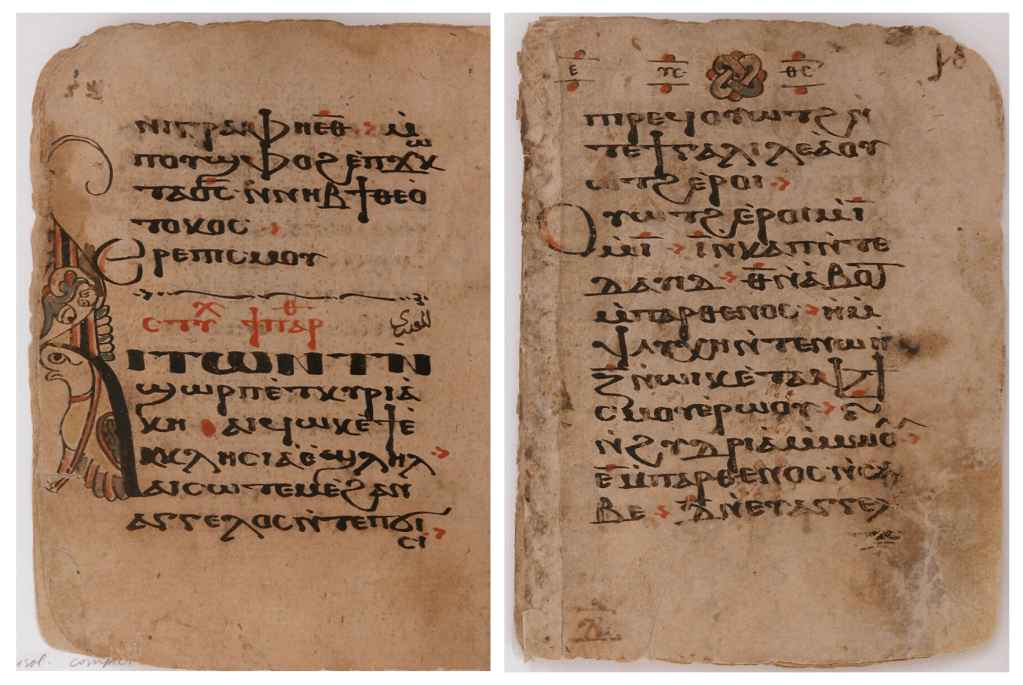
The reader did not need to expose every preceding section in order to reach a later one. Instead, pages could be turned independently.
The physical action of reading changed from unrolling to turning. That difference affected the organization of information as well.
When text occupies distinct pages, location becomes easier to perceive. A reader can remember that a passage appeared near the beginning, somewhere in the middle, on a left-hand page, or close to another section.
The page became more than a surface for writing.
It became a unit for navigating information.
Why Did the Codex Become More Useful?
There was no single moment when everyone abandoned scrolls and adopted codices. The transition took centuries, and scrolls continued to be used even as codices became increasingly common.
The two forms also existed in different cultural and practical contexts. The rise of the codex should therefore not be reduced to a story in which a “better” technology instantly replaced an inferior one.
Still, the codex offered several practical possibilities.
Text could be written on both sides of a leaf. A substantial amount of writing could be gathered into a relatively compact object. Individual sections of a book could be reached without unrolling an entire continuous document.
The form was also particularly important in early Christian book culture. Early Christians adopted the codex extensively for scriptural and other texts, although scholars continue to discuss exactly why the format became so strongly associated with Christian communities.
Over time, the codex became increasingly prominent across the late ancient Mediterranean world.
Its success was not simply about saving space.
The codex made a long written work easier to divide, navigate, revisit, and compare.
Pages Changed the Way Readers Found Information
Once information was divided into pages, new methods of navigation could develop around that structure.
The modern systems we take for granted—page numbers, tables of contents, indexes, headings, footnotes, and cross-references—did not all appear at once with the first codices.
Many developed much later.
But the codex provided a physical structure in which increasingly sophisticated navigation systems could eventually flourish.
That distinction matters. The codex did not automatically give ancient readers a modern index. What it provided was a different architecture for written information.
A scroll asks the reader to move along a line.
A codex allows the reader to move among leaves.
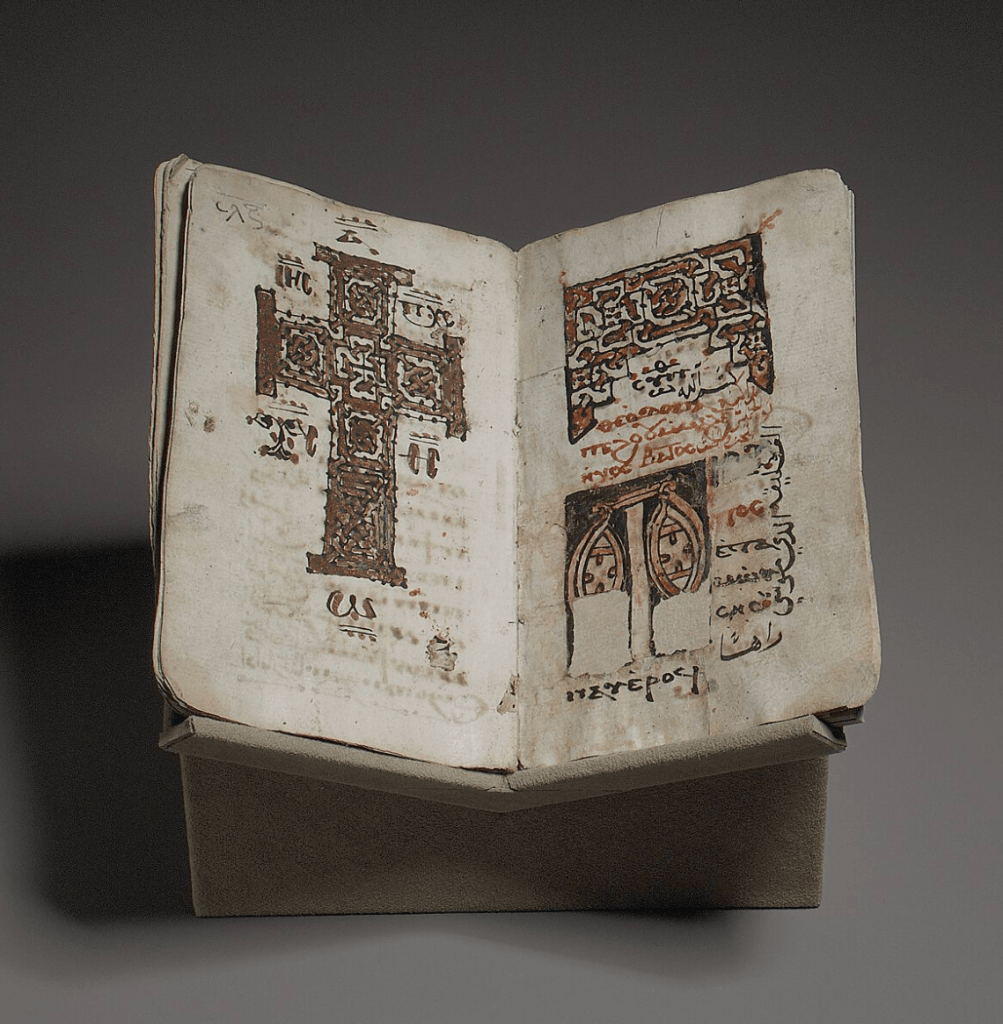
That seemingly small difference created a new relationship between the reader and the record.
Reading no longer had to mean simply proceeding through a text from one point toward another. It became easier to return to an earlier passage, jump forward, compare sections, and repeatedly consult particular parts of a work.
In other words, the book became increasingly useful not only for preserving information, but also for retrieving it.
The Shape of Information Still Matters
The transition from scroll to codex may feel distant from digital life, but the underlying problem is surprisingly familiar.
Every information system has an interface.
A scroll offers one kind of interface: a continuous physical sequence.
A codex offers another: a collection of pages that can be accessed individually.
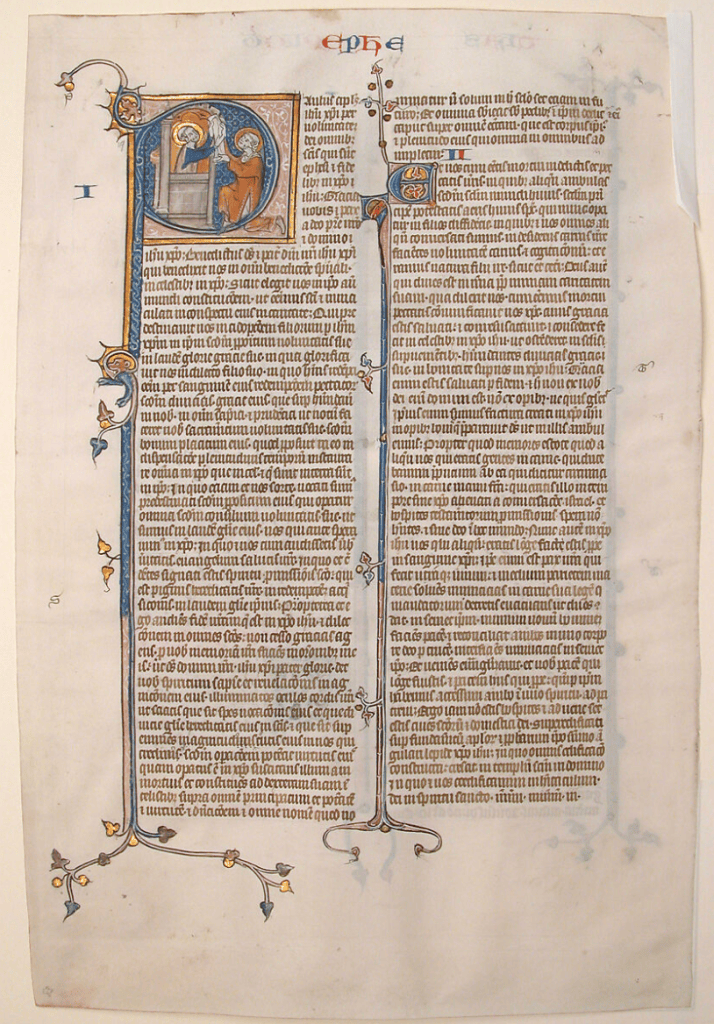
A modern digital document adds still more possibilities. We can search for a word, follow a hyperlink, jump through a table of contents, open several documents at once, or move directly to a specific location.
Each change reduces some forms of friction while introducing new ways of organizing information.
That is why the history of the book is not only the history of writing materials.
It is also the history of navigation.
Papyrus helped records become lighter, portable, and capable of extending across long connected surfaces. The codex reorganized those surfaces into pages.
And once information had pages, readers could interact with recorded knowledge in ways that would eventually become so ordinary that we rarely notice them at all.
FAQ
What is a codex?
A codex is a book form made from sheets or leaves gathered and bound along one edge. Unlike a scroll, which presents writing along a continuous rolled surface, a codex allows readers to turn individual leaves. The basic structure is the ancestor of the modern bound book.
Did the codex immediately replace the scroll?
No. The transition occurred gradually over several centuries. Scrolls and codices coexisted, and their use varied by period, region, community, and type of text. By late antiquity, however, the codex had become increasingly dominant as a book form.
Was the codex invented by Christians?
No. Codex-like writing formats existed before Christianity. Early Christian communities are important to the history of the codex because surviving evidence shows particularly strong adoption of the format for Christian texts. That is different from saying Christians invented the codex.
Sources and Further Reading
The Metropolitan Museum of Art — The Art of the Book in the Middle Ages

