Paper is so ordinary today that it is difficult to imagine it as a technological breakthrough.
We write on it, print on it, fold it, bind it into books, and discard it without much thought. Yet for much of human history, recording information meant working with materials that were heavier, more expensive, harder to produce, or suited to particular forms of writing.
Clay tablets preserved information remarkably well. Papyrus made records lighter and more portable. The codex reorganized long texts into leaves that readers could turn and revisit.
Paper introduced another transformation.
Made from processed plant fibers formed into thin sheets, paper could eventually be produced in large quantities and adapted to many kinds of writing, painting, administration, bookmaking, and—later—printing.
Its history was not the story of one sudden invention spreading instantly across the world. It was a long process of experimentation, refinement, and transmission.
And as paper traveled, it helped change the scale at which societies could create and circulate recorded knowledge.
Paper Did Not Begin with a Single Moment
The invention of paper is often associated with Cai Lun, an official of the Eastern Han court in China.
Traditional accounts connect him with improvements in papermaking around 105 CE. But archaeological evidence shows that forms of paper existed in China before that date.
The Metropolitan Museum of Art notes that fragments of rag paper are known from as early as the second century BCE, while one of the earliest surviving examples of hemp paper bearing writing dates to around 109 CE. Cai Lun is better understood as an important figure in the development of papermaking rather than simply the person who created paper from nothing. The Metropolitan Museum of Art
Early Chinese papermakers experimented with fibrous materials including hemp and other plant sources. The basic principle differed fundamentally from making papyrus.
Papyrus was created by arranging strips of the plant’s inner stalk into layers. Paper was made by breaking fibrous material down, suspending the fibers in water, collecting them into a thin layer, and drying that layer into a sheet. That distinction created an extraordinarily adaptable material.
Paper did not depend on cutting a particular plant into writing-sized strips. Different fibers could be processed and reformed into new surfaces. The writing surface was no longer simply taken from a plant. It was manufactured from fibers.
Paper Gradually Became a Practical Recording Material
A useful recording technology needs more than an ingenious method of production.
People must be able to make enough of it, write effectively on it, store it, transport it, and incorporate it into existing systems of administration and communication.
Paper gradually achieved those things in China.
By the third century CE, The Met notes, paper was widely used there and increasingly replaced older writing materials such as bamboo, wooden slips, and silk for many purposes. The Metropolitan Museum of Art
That comparison helps explain why paper mattered.
Bamboo and wooden slips could carry writing, but collections of them could become physically cumbersome. Silk provided an excellent surface but was valuable.
Paper offered a different balance.
It could be light and flexible while providing a surface suitable for writing. Sheets could be stacked, folded, joined, stored, and eventually bound into different forms.
As production developed, paper became useful not merely for exceptional texts but for the expanding everyday work of recorded information.
Administration, correspondence, religious texts, literature, scholarship, art, and many other activities could make use of the same basic medium. Paper was becoming an information infrastructure.
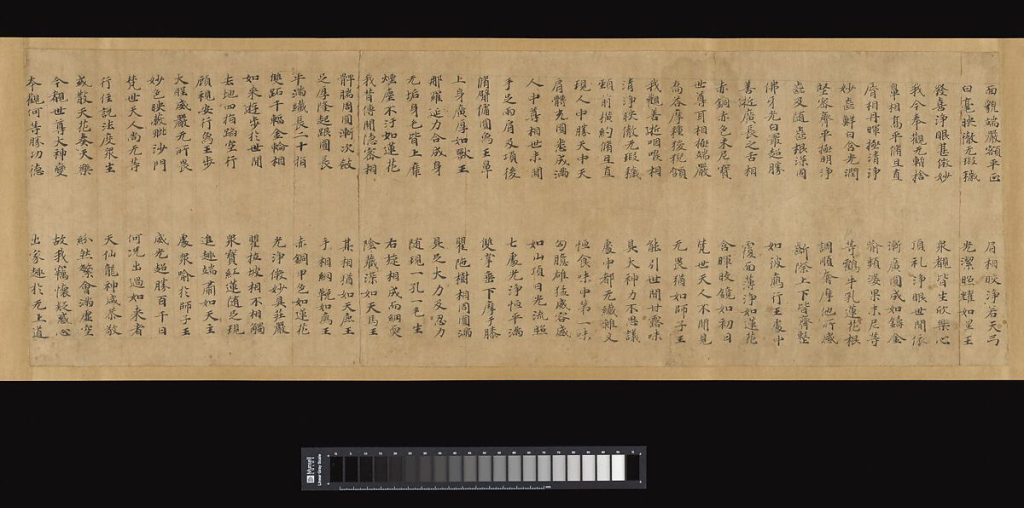
Papermaking Traveled Across Cultures
Paper did not remain confined to China.
Knowledge of paper and papermaking gradually moved through East and Central Asia and into other regions. The process took centuries and did not follow one simple route.
The Met notes that paper spread to Korea and Japan by the seventh century and eventually reached Europe, most likely through Central Asian or Islamic intermediaries. The Metropolitan Museum of Art
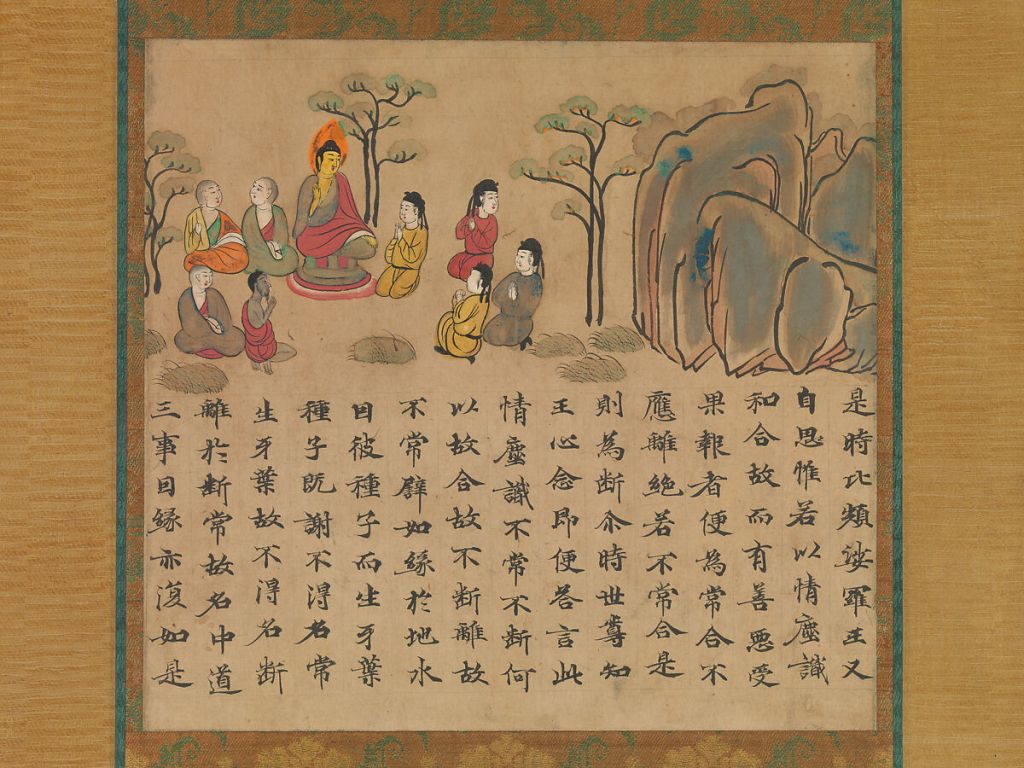
The movement westward is especially important because it illustrates how technologies travel.
A popular story claims that Chinese prisoners captured at the Battle of Talas in 751 revealed the secret of papermaking to the Islamic world. The story is memorable, but the historical process was probably more complicated.
A Smithsonian account by historian Valerie Hansen notes that many scholars believe papermaking may have moved westward before 751 rather than beginning with one dramatic transfer after the battle. Under the Abbasid Caliphate, paper production expanded, and paper became increasingly important for manuscripts and administration across the Islamic world. Smithsonian Folklife Festival
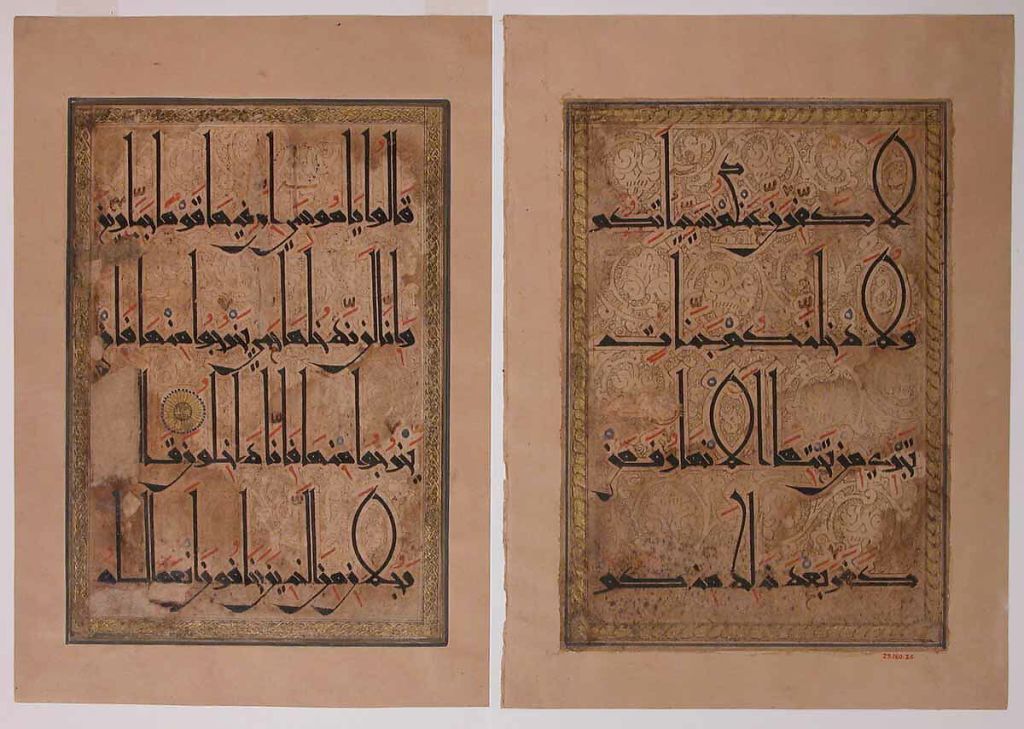
From there, papermaking traditions continued to spread.
Paper reached parts of Europe through contacts with the Islamic world, including routes through Spain and Sicily. European papermaking then developed further over subsequent centuries.
This was not simply an object moving from one civilization to another. It was knowledge about how to make the object that traveled. Local craftspeople adapted materials, production methods, and uses to their own environments.
More Paper Made More Records Possible
Paper alone did not create mass literacy, modern bureaucracy, or the printed book.
Those developments depended on institutions, education, economic conditions, technologies, and many other historical factors.
But paper changed what those systems could build upon.
A society that can produce more writing surfaces has greater capacity to create records.
More correspondence can be preserved.
More accounts can be kept.
More manuscripts can be copied.
More students can write.
More ideas can circulate beyond the place where they were first recorded.
The effect became even more significant when paper later met another technology: printing.
Printing requires a surface on which repeated copies can be produced. Paper provided a material that could support the growing production and circulation of texts.
This is why the history of paper cannot be separated from the later history of books and information. Paper did not merely replace earlier writing materials. It helped make recording itself more scalable.
When the Medium Becomes Ordinary, Information Can Multiply
The most transformative technologies often become invisible.
Few people opening a notebook today think about the fibers that form its pages. We focus on the information because the recording medium has become ordinary. That ordinariness is part of paper’s historical importance.
Clay, papyrus, parchment, bamboo, wood, silk, and paper all solved different problems in different places and periods. None can be understood simply as a universal replacement for everything that came before it.
But paper achieved an unusual combination of qualities: it could be lightweight, flexible, writable, transportable, and increasingly producible at scale.
As papermaking spread across cultures, those qualities supported larger systems of recorded knowledge. The next major transformation would amplify that effect dramatically.
Once societies could make suitable writing surfaces in quantity, the question was no longer only how to record information.
It was also:
How could the same information be copied again and again?
That question would lead to another turning point in the history of records—the development of printing.
FAQ
Was paper invented by Cai Lun in 105 CE?
Not exactly. Chinese historical tradition strongly associates Cai Lun with papermaking around 105 CE, but archaeological evidence indicates that forms of paper existed in China earlier. Surviving examples have been dated to the centuries before and around his lifetime. Cai Lun is therefore better understood as an important figure in the development and improvement of papermaking rather than as the unquestioned sole inventor of paper. Museum of Computer History
How is paper different from papyrus?
Papyrus is made by arranging strips cut from the papyrus plant into layers and pressing them together. Paper is produced from fibers that are processed, dispersed in water, formed into a thin layer, and dried into a sheet. Although both can be used as writing surfaces, their structures and manufacturing methods are fundamentally different.
Did paper spread directly from China to Europe?
No. The spread occurred over many centuries and through multiple regions and cultures. Papermaking moved through East and Central Asia and became important in the Islamic world before establishing itself widely in Europe. The exact routes and timing are complex, so it is misleading to describe the process as a single direct transfer. The Metropolitan Museum of Art
Sources and Further Reading
The Metropolitan Museum of Art — China, 1–500 A.D.
Smithsonian — Paper: Chinese Paper Moved Along the Silk Road
Smithsonian Museum Conservation Institute — On the Origin of Papermaking

