Printing made it possible to reproduce written knowledge on a larger scale. But as books and documents multiplied, another challenge became increasingly important: how could people find the information they needed?
Today, searching a library catalog or digital collection may take only a few seconds. A title, author’s name, or keyword can lead directly to a relevant result.
For much of history, however, there was no electronic search box. Finding a particular text depended on the way a collection had been described, arranged, and maintained.
Libraries developed different solutions to this problem. Lists identified what a collection contained. Classification systems grouped related works. Catalogs helped readers locate individual items.
These methods did more than keep shelves orderly. They gradually separated two important questions: What information exists, and where can it be found?
Ancient Libraries Needed More Than Shelves
Long before printed books became common, institutions collected written records for administration, scholarship, religion, and cultural preservation.
Ancient Mesopotamian collections contained clay tablets recording subjects ranging from economic transactions to literature and scholarly knowledge. Some tablets carried identifying information, and certain collections used arrangements or lists that helped people recognize and retrieve texts.
One particularly important example is the library associated with Ashurbanipal, the Assyrian king who ruled in the seventh century BCE.
Thousands of clay tablets and fragments from this collection were discovered at Nineveh, near modern Mosul in Iraq. The collection included literary, religious, medical, and scholarly texts.
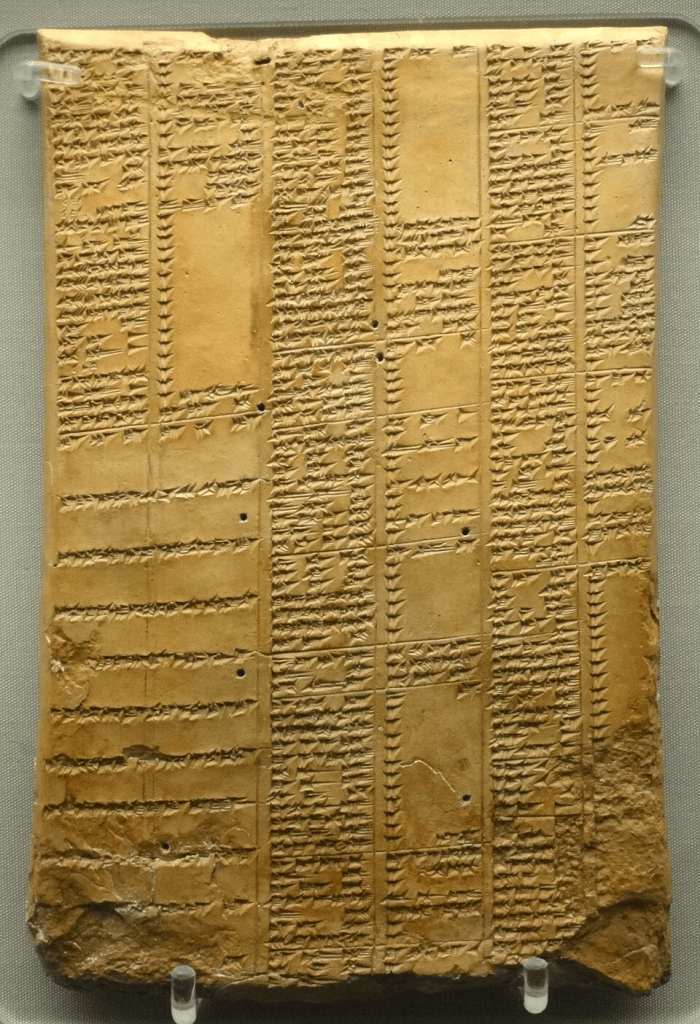
Its importance was not simply the number of tablets preserved. It also demonstrated the deliberate gathering of written knowledge in a royal institution.
But organizing clay tablets was different from organizing modern books.
Tablets did not have standardized printed title pages or ISBNs. A text might be identified by its opening words, subject, series, or other information associated with the tablet.
As collections grew, knowing that a text existed was not enough. Someone also needed a way to recognize it among many other records.
A related challenge appeared in the ancient Mediterranean world.
The Library of Alexandria, established during the Ptolemaic period in Egypt, became one of antiquity’s most famous centers of scholarship.
The scholar Callimachus, active in the third century BCE, is associated with the Pinakes, an extensive bibliographical work that organized information about Greek authors and their writings.
The Pinakes has not survived as a complete work, and the precise relationship between it and the physical arrangement of the Alexandrian collection remains uncertain.
Nevertheless, it represents an important development: written works could be described and organized through a separate body of information about them.
In other words, people were beginning to create records about other records.
Catalogs Helped Readers Find What Collections Contained
A library catalog serves a different purpose from a shelf.
A shelf holds physical objects. A catalog describes those objects so that people can identify them.
That distinction became increasingly useful as manuscript collections expanded.
In medieval monasteries and other religious institutions, books were valuable objects. Producing a manuscript required materials, skilled labor, and considerable time.
Institutions therefore had practical reasons to record what they owned.
An inventory could help identify missing volumes, manage loans, or preserve information about a collection. Some lists were relatively simple, while others provided more detailed descriptions.
These records were not always catalogs in the modern sense. They varied considerably in structure and purpose.
A list arranged by physical location might help a librarian find a volume on a particular shelf. A list arranged by author or subject could support a different kind of search.
This distinction matters because the order of books and the order of information about books do not have to be identical.
A book can occupy only one physical position on a shelf at a time.
But a catalog can describe that same book under several different headings.
A reader might know an author’s name without knowing the title. Another reader might know the subject but not the author.
A useful catalog creates alternative routes to the same item.
This principle would become increasingly important as collections grew beyond what any individual librarian could easily remember.
Classification Gave Large Collections a Structure
Cataloging identifies and describes individual works. Classification addresses a related question: how should works be grouped?
One approach is to organize books by subject.
Books about medicine might be placed together. Historical works might occupy another section. Religious texts, philosophy, mathematics, and literature might each have their own place.
Such arrangements can make browsing easier because related materials are brought into proximity.
But classification introduces difficult decisions.
Where should a book about the history of medicine belong? Under history or medicine?
What about a work that combines philosophy, mathematics, and astronomy?
No classification system can represent every relationship perfectly.
The categories chosen by a library reflect practical needs, intellectual traditions, and assumptions about how knowledge is divided.
As libraries expanded during the nineteenth century, standardized systems offered a way to organize increasingly large collections.
One influential example was the Dewey Decimal Classification, introduced by Melvil Dewey in 1876.
The system organized knowledge into broad numerical classes, which could be subdivided into more specific subjects.
Its numerical structure allowed libraries to assign classification numbers to works and arrange related materials systematically.
The approach was especially useful because a classification number could do more than describe a subject. In a library using that arrangement, it could also help determine where a book belonged.
However, the system was not a neutral or complete map of human knowledge.
Like other classification systems, it reflected the historical and cultural assumptions of the period in which it developed. Its categories have been revised over time, and debates about representation and bias remain important in library organization.
Classification therefore solved one problem while creating another.
It made large collections easier to navigate, but it also required people to decide how knowledge should be divided.
Card Catalogs Made Searching More Flexible
Before computerized catalogs, many libraries used physical card catalogs.
A card typically described a particular work and included information such as its author, title, publication details, and location or classification number.
Cards could be arranged alphabetically in drawers.
A library might maintain different access points for the same work, allowing readers to search by author, title, or subject.
Imagine a reader looking for a book about ancient Egyptian writing.
The reader might not know its exact title.
A subject entry could help identify relevant books. Once the reader found a promising record, the classification or call number could guide them toward the corresponding shelf.
This process involved two separate stages.
First, the reader searched a representation of the collection: the catalog.
Second, the reader used the information in that representation to locate the physical item.
The catalog acted as an intermediary between a question and a book.
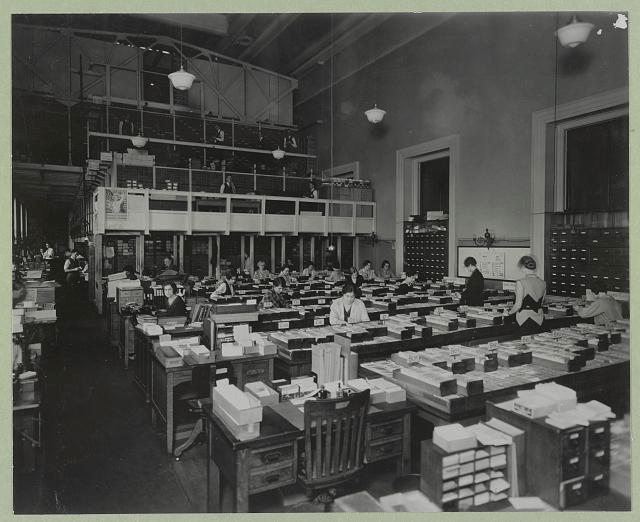
Card catalogs also had limitations.
Maintaining them required considerable work. New books needed new records. Corrections could require replacing or updating cards. Searching depended on the access points librarians had prepared in advance.
A reader could not necessarily search for an arbitrary word appearing somewhere inside a book.
Even so, the underlying idea was powerful.
Instead of examining every book individually, readers could search a structured set of descriptions. That is one of the central principles behind modern information retrieval.
From Library Catalogs to Digital Search
Digital catalogs changed the physical form of library searching, but they did not eliminate the need for organization.
Modern library systems still rely on descriptive information about books and other resources.
Titles, creators, subjects, publication information, identifiers, and relationships between records help people distinguish one item from another.
Computerized systems can combine multiple access points and support searches that would be cumbersome in a physical card catalog.
A reader can search across many records without opening individual drawers or manually checking separate lists.
Yet the underlying challenge remains familiar.
A search system needs ways to represent information so that people can find it.
This is why the history of library organization connects directly to modern digital knowledge management.
A folder gives a file a location.
A title gives it a recognizable identity.
A tag or subject heading provides another way to discover it.
A link can connect it to related information.
These methods are not identical, but they respond to problems that libraries have faced for centuries.
As the amount of recorded knowledge increases, storing information becomes only part of the task.
The larger challenge is making it possible to find the right information when it is needed.
Printing helped more copies of texts circulate. Libraries, catalogs, and classification systems helped people navigate the growing collections that followed.
The next stage in the evolution of records would bring these organizational questions into personal notebooks, files, and eventually digital systems.
FAQ
What is the difference between a library catalog and a classification system?
A library catalog describes individual resources and helps readers identify or locate them. A classification system groups works according to an organized scheme, often based on subject. Libraries may use classification numbers within catalog records, but cataloging and classification serve different purposes.
Did the Library of Alexandria have the first library catalog?
The Library of Alexandria is associated with Callimachus and the Pinakes, an important ancient bibliographical work. However, earlier civilizations also used lists and other methods to identify written materials. It would therefore be misleading to describe the Pinakes as the first attempt in history to organize records.
Why were card catalogs important before computers?
Card catalogs allowed readers to search descriptions of books without examining every volume on the shelves. Entries arranged by author, title, or subject provided different ways to identify a work, while classification or call numbers helped readers locate it physically. Although digital catalogs eventually replaced many card systems, the principle of searching organized descriptions remains important.
Sources and Further Reading
The Library of Congress — The Card Catalog: Origins and Development
The Library of Congress — Catalogs before the Card Catalog
The Library of Congress — About the Main Card Catalog
OCLC — Dewey Decimal Classification Timeline
The Library of Congress — The Card Catalog: Books, Cards, and Literary Treasures

